Risk Management
Basic Policy
The Aozora Group positions risk management as an important foundation for engaging in Materiality-based management. We are working to enhance our risk management through the establishment of a system to appropriately ascertain and control risks individually and in the aggregate, and through appropriate and disciplined management based on regulations stipulated for each risk category.
Through efficient management and utilization of managerial resources and sound risk-taking, we will realize Aozora’s management philosophy to “contribute to the development of society through the creation of new value-added services” with a basic policy of sustainable and stable accumulation of earnings, capital adequacy, and corporate growth.
Management Structure
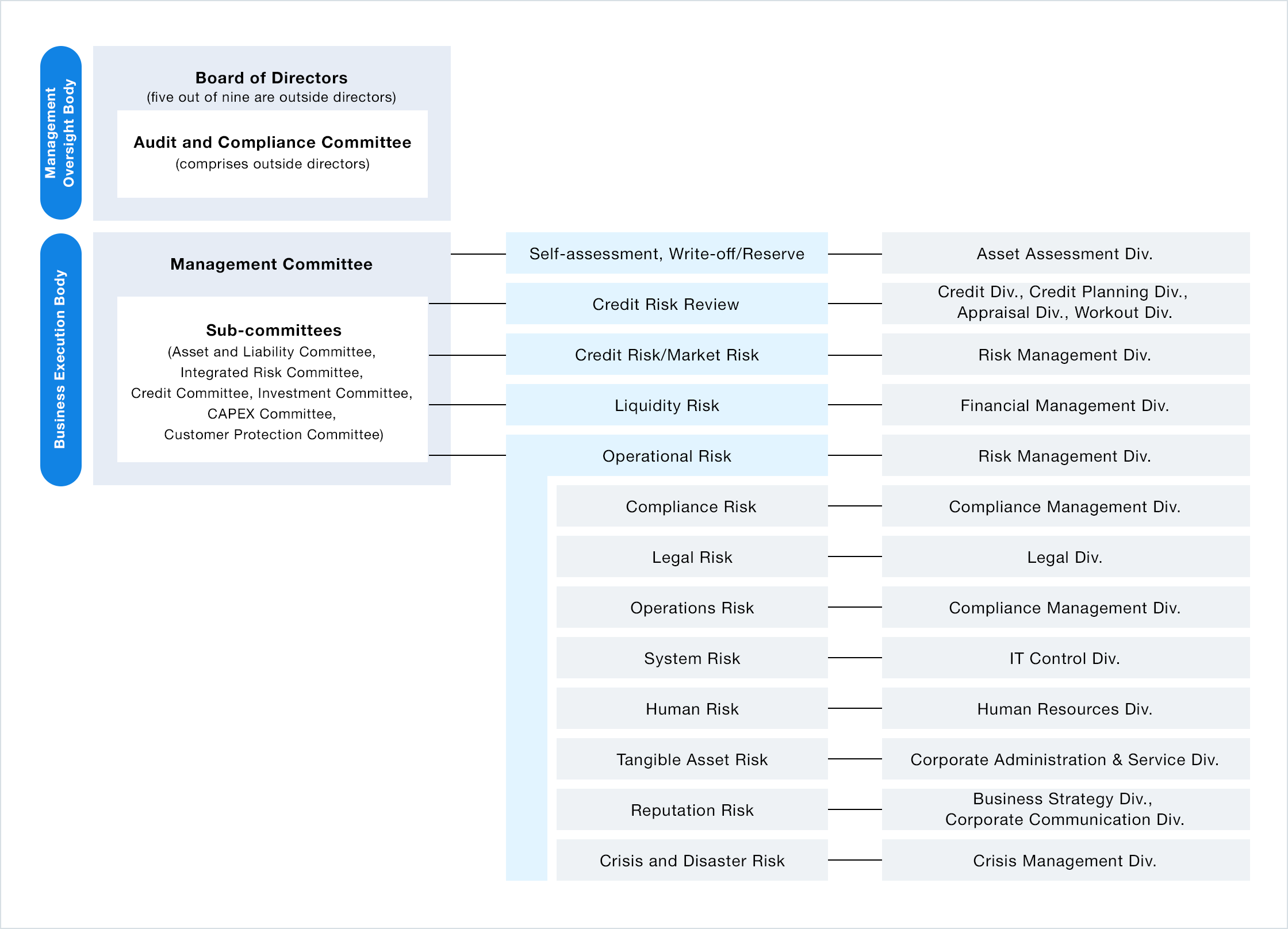
The risk management structure is organized into two major groups. The first is the Board of Directors and the Risk Governance Committee, in which outside directors constitute a majority. The second is the Management Committee and sub-committees to which it delegates authority. The Management Committee and sub-committees analyze and take into consideration a range of risks arising from the origination of loans and investments, the delivery of services to customers, and business operations from a broad perspective. In addition, each risk management division monitors the status of Aozora’s risk both on a regular and as-needed basis, and reports the results of these efforts to the Management Committee and sub-committees to ensure the flexible and proper management of risk.
The status of risks is also reported to the Board of Directors and the Risk Governance Committee on a regular and as-needed basis, and the appropriateness and effectiveness of risk management are discussed to ensure the effectiveness of risk governance.
Risk Management Structure
Key Risks
We discuss our risk appetite framework and business planning based on the following key risks, and also strive for a higher level of risk management.
- Increase in credit costs
- Instability of funding
- Deterioration in unrealized gains/losses on securities portfolio
- Damage due to cyberattacks
- Damage due to system failures
- Inadequate response to financial crimes
- Risk of internal fraud and misconduct
- Outbreak of large-scale disasters and other crises
- Reduced competitiveness due to changes in the social structure or industrial structure
- Sustainability of human resources
Please refer to page 15 of the Annual Report 2026 (Financial and Corporate Data Section) for details of key risks.